Small Business Marketing Strategies That Actually Work

A salon with empty Tuesday appointments needs a different marketing plan from a plumber receiving plenty of calls for jobs outside the service area. One needs more bookings during quiet hours. The other needs better-qualified enquiries.
Useful small business marketing strategies start with a specific gap: too few people finding the business, too many leaving without booking or too few customers returning. For local services there is some smart ways to deal with those gaps without requiring a large advertising budget.
Give customers a specific reason to choose your service
Review your last ten profitable jobs. Look for a shared service, customer problem or location. Build an offer around the pattern rather than advertising every service with equal emphasis.
For example, a cleaner targeting end-of-tenancy work should explain the property sizes covered, what the clean includes, how access works and how to request a quote before a moving deadline. These details give landlords and tenants something concrete to assess.
When someone compares three providers offering similar services at similar prices, an explanation of how you handle their particular problem gives them a reason to contact you beyond a generic promise of quality.
A narrow offer does not require abandoning other work. Give your most promising service a dedicated page, a clear booking route and a few relevant examples. Judge the response through suitable enquiries and completed jobs.
Use Google Business Profile to answer local buying questions
Google says local results mainly reflect relevance, distance and popularity. Its local ranking guidance recommends complete business information, verification and accurate opening hours. There is no payment for a better organic local ranking.
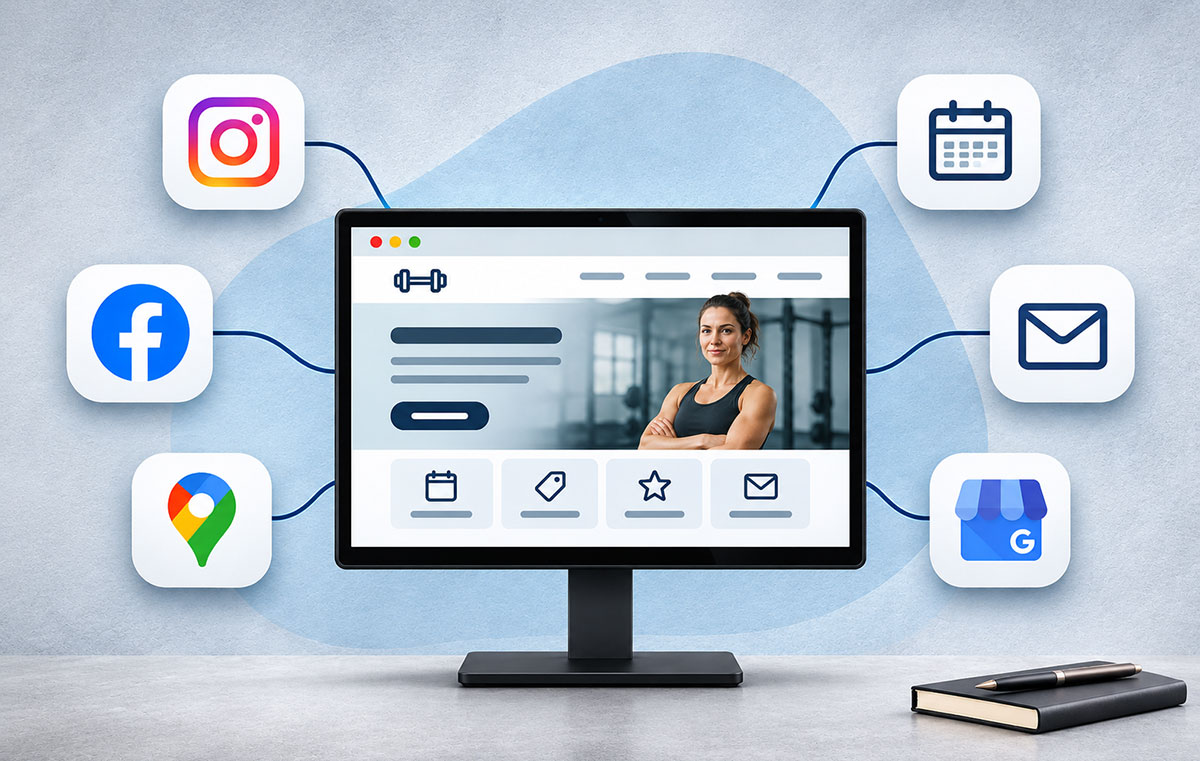
Review your profile as someone deciding whom to call. Does the category describe your main business? Are the hours accurate? Does the website link lead to the relevant service information? Add photographs showing real work, premises or equipment rather than relying entirely on a logo.
- For a salon, show examples of the treatments you want booked.
- For a tradesperson, explain the work accepted and the areas served.
- For a fitness studio, make the location and route to class information clear.
If callers repeatedly ask about parking, weekend availability or a particular service, add the answer wherever the profile supports the information. Repeat essential details on your website so visitors arriving through another route receive the same answers.
Do not interpret an updated profile as a promise of first place. Distance remains part of Google’s ranking system, so focus on relevant local enquiries rather than expecting equal visibility across an entire county.
Make reviews part of completing a job
Ask for an honest review after completing the service, while the customer still remembers the experience. Use the same approach consistently rather than asking only people who have already praised you.
Google’s review guidance allows businesses to request reviews through a link or QR code. Discounts, gifts and other incentives in exchange for Google reviews are prohibited.
Place a review QR code at reception or include the link in an appropriate follow-up. Keep the request brief. Avoid supplying a script for customers to copy or asking for a particular star rating.
Use recurring feedback to improve your marketing too. If several customers mention clear pricing or careful explanations, describe those parts of your service on the relevant page. With permission, feature a genuine testimonial beside the service being discussed rather than hiding every review on a separate testimonials page.
Remove the gap between interest and booking
Open your website and social profile on a phone. Follow the route from a service description to an appointment or quote request. Note every point requiring someone to search for a price, repeat information or wait for a reply before understanding the next step.
A standard haircut suits direct appointment booking. A roof repair usually needs a description, location and photographs before a useful quote. Match the contact route to the information needed to accept the work. Ask someone unfamiliar with your website to complete the process, then remove questions you do not need for the initial response.
Real example: Citryne Rose
In a 2023 case study about New York salon Citryne Rose, Fresha reported five times more bookings after introducing its social booking integration. The account also reports 80% of bookings arriving through Instagram.
The salon promoted new stylists through social content and gave viewers a direct booking route. Memberships formed part of the wider approach. These supplier-reported results do not isolate the booking button’s effect, but the practical lesson is useful: connect service-specific content to the next customer action.
If a potential client sees a colour treatment they want, send them to the relevant service or consultation page rather than leaving them to work through an unrelated homepage and a general contact form.
Bring existing customers back with a relevant reason
Separate customers by the service purchased and the normal interval between visits. A previous class attendee needs a different message from someone who requested a quote but never booked.
For a salon, start with one treatment and identify customers due for another visit. For a gardener, offer seasonal maintenance to previous customers with suitable properties. State the service, available dates and booking route instead of sending a general newsletter containing every business update.
Real example: Blush + Blow
Fresha’s case study of London salon Blush + Blow describes targeted email and text campaigns covering seasonal offers and new treatments. Fresha reports an average return on campaign spend of 15 times the cost alongside a threefold increase in skin-service sales.
Those figures come from the supplier’s account. The page does not provide enough cost detail to treat the return as net profit after treatment delivery, staffing and every marketing expense. Use the example to plan a relevant customer campaign rather than forecast the same return.
Before sending promotional emails or texts, confirm permission. Both Ireland’s Data Protection Commission guidance and the UK’s ICO guidance describe consent requirements and limited customer exceptions. An old booking record alone is insufficient. Use a clear marketing opt-in where appropriate, provide an unsubscribe route and honour objections.
Turn recommendations into a trackable source of work
Add a question to your booking or enquiry process asking how the customer heard about you. If someone recommended the business, record the source alongside the completed job. This separates casual mentions from recommendations producing revenue.
Real example: Trash Daddy
Waste collection service Trash Daddy used a referral programme offering a first-order discount to new customers and ongoing commission to referrers. In its public case study about Trash Daddy, ReferralHero reports 613 subscribers acquired through referral links out of 779 total subscribers over six months.
The supplier identifies customer Facebook posts and promotion inside the service’s app as important sources of referrals. These are supplier-reported signups, with no independent audit provided. They do not demonstrate profit or prove every subscriber became a paying repeat customer.
The practical lesson is to track recommendations through to payment. If you offer a reward, include the reward and any introductory discount when calculating acquisition cost rather than treating referred business as free.
For a smaller operation, begin with a spreadsheet recording the source, service booked and amount paid so you have a record of which recommendations lead to completed work before spending money on referral software. Avoid copying overseas referral messaging without checking local requirements. The ICO also warns about encouraging customers to forward promotional emails or texts. Do not collect friends’ contact details for unsolicited campaigns.
Build partnerships around a shared customer need
Choose a complementary business serving people who need your service at a specific moment. A removal company and an end-of-tenancy cleaner share a moving deadline. A wedding photographer and a bridal hair specialist share a wedding date.
Approach a small number of suitable businesses with a concrete proposal: an introduction process, a joint planning checklist or a place on a genuinely useful recommended-suppliers page. Explain your coverage, lead time and approach to handling enquiries.
Before recommending another provider, experience their work or review enough evidence to understand the service, because a poor recommendation puts your own customer relationship at risk even when no referral fee changes hands.
Review introductions after the first few jobs. Check how many became paid work, how smoothly the handover went and if the customers suited both businesses. Keep arrangements easy to stop if service standards disappoint.
Publish evidence from work you already do
Turn a completed job into a short explanation of the customer’s problem, your approach and the result. Obtain permission before publishing identifiable customers, properties or photographs.
A decorator’s before-and-after post becomes more informative when the caption explains surface preparation, the finish chosen and the time required. A trainer’s demonstration becomes more useful when the explanation identifies the exercise’s purpose and the audience suited to the session.
Reuse the strongest example on the matching service page and your main social channel. Include the relevant location where useful, but avoid exposing a customer’s address. A few detailed examples give prospects more evidence than a feed filled with interchangeable motivational graphics.
Answer questions heard during sales conversations. Explain what changes the price, what preparation customers need and what happens during the first visit. These topics support a buying decision without requiring you to invent a new subject every week.
Reserve paid advertising for a controlled test
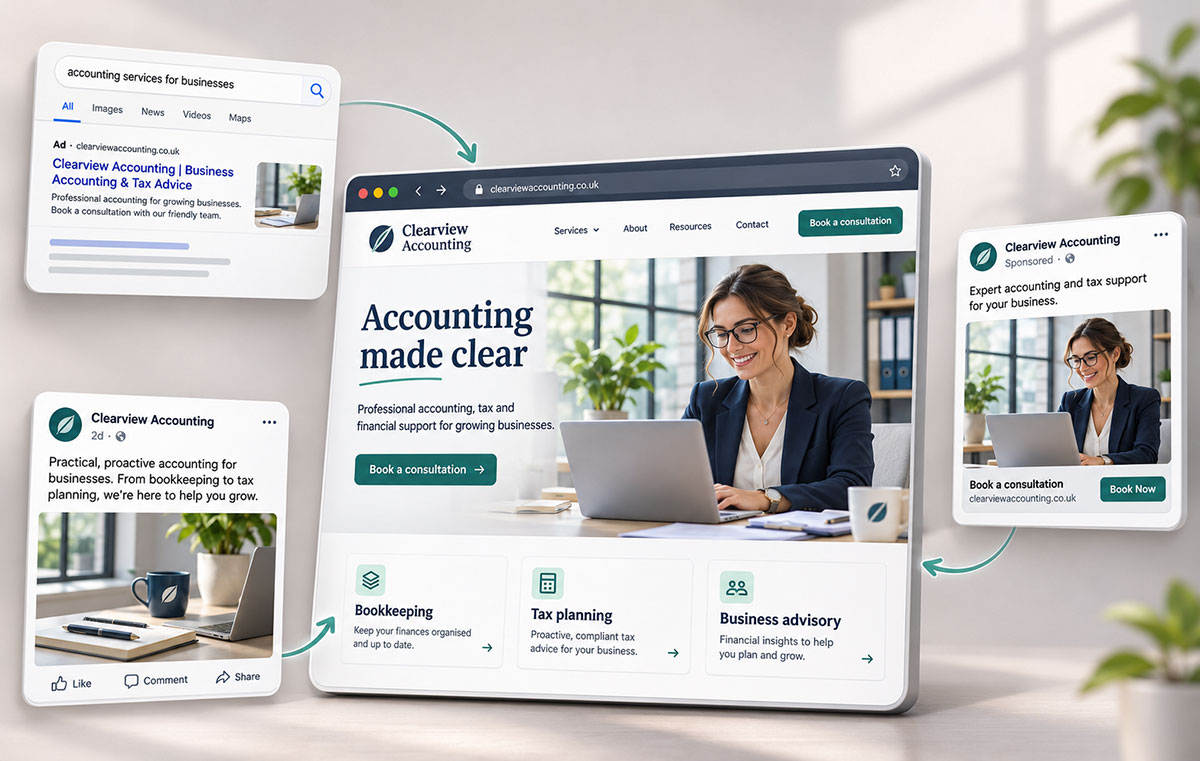
Once a service page generates suitable enquiries, consider a small paid search test targeting the service and locations you serve. Start with one offer so the results reveal something useful about demand and profitability.
Set a maximum acceptable acquisition cost before launch. In an illustrative example, a £200 job with £80 remaining after direct delivery costs leaves little room for a £70 advertising cost per customer once overheads are considered.
Track qualified enquiries, paid jobs and acquisition cost by source. If ten enquiries produce two completed jobs, divide the campaign cost by two when calculating customer acquisition cost rather than reporting the cheaper cost per enquiry alone.
Apply the same discipline to low-cost marketing. Record hours spent as well as money. A monthly partnership visit producing profitable repeat work deserves a different decision from daily social posting producing attention but no suitable bookings.