Do Small Businesses Need a Website?
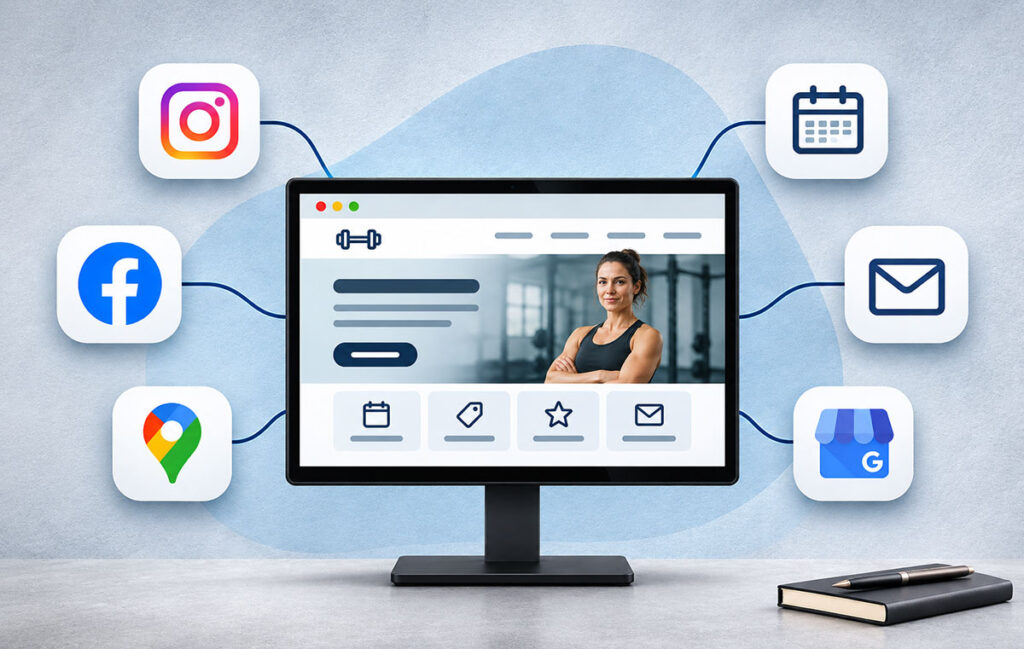
A personal trainer gets all new clients through Instagram. A tattoo artist uses Facebook to display previous work and take bookings. A local tradesperson receives enquiries through Google Maps. None has a website and all three are getting enough business.
So what would a website add?
The answer isn’t necessarily more customers. A website provides a central location for business information, additional opportunities to appear in Google Search and an alternative way for customers to get in touch when other platforms become unavailable.
1. One official source for business information
A business might have profiles on Instagram, Facebook, Google Maps, several directories and perhaps a booking platform. Each contains some information about the business, but not necessarily the same information.
This becomes an issue when details change. A new phone number or address needs to be updated across multiple platforms, some of which review changes before publishing them.
A website provides one official location for current business information, including services, pricing, opening hours, contact details and booking options. Links to social media profiles and other relevant platforms also help customers identify the business’s official channels.
While businesses have direct control over the information published on their websites, the same does not apply to third-party platforms. Google, for example, reviews changes to Business Profiles and decides whether to accept them. An updated website does not guarantee approval, but at least the correct information is already available somewhere.
2. Dependence on third-party platforms
Instagram, Facebook and other platforms regularly change their algorithms, account policies and available features. Accounts also get suspended or restricted, sometimes leaving businesses without access to an important communication channel.
Consider the personal trainer mentioned earlier. With a full appointment book and a well-established Instagram profile, there might be little incentive to invest in a website.
If the account becomes inaccessible, however, customers need another way to find booking information or get in touch.
An established website provides an alternative contact point and a permanent address to share through other channels.
3. Additional visibility in Google Search
A Google Business Profile allows local businesses to appear in Google Search and Maps without having a website. These listings are particularly useful for searches involving a business name, location or service category.
However, local business listings and regular organic search results are different.
For example, a personal trainer specialising in strength training for beginners might have a dedicated page explaining this service. The page provides Google with relevant content to consider when someone searches for this particular type of training.
The same applies to tattoo artists offering specific styles, tradespeople providing specialised services or other businesses with offerings that deserve more detailed explanations.
Having a website does not guarantee rankings. New websites often receive little organic search traffic initially and competitive searches require considerably more work.
Without a website, however, businesses have no dedicated pages of their own to compete for these searches. They depend on their profiles and listings on other platforms instead.
4. Websites and social media serve different purposes
Instagram works well for visual content, Facebook for community engagement and Google Business Profiles for local visibility. Booking platforms and marketplaces have their own advantages.
A website brings information from these channels together.
Someone finding a tattoo artist on Instagram might want to see available services, pricing information, booking requirements and contact details. While some of this information might be available on Instagram, a website allows the business to present everything in a more organised format.
Another difference is control over the visitor experience. Social media platforms determine the layout and surround business content with advertisements, recommendations and posts from other accounts.
On a website, the business decides how information is organised and which options are presented to visitors.
5. Credibility and trust
Before contacting an unfamiliar business, potential customers often check reviews, previous work and contact information.
A website provides another source for these details, along with service descriptions, customer testimonials and links to other business profiles.
Having a website alone does not establish credibility. An outdated website with incorrect information might have the opposite effect.
Accurate information, consistent branding and a professional presentation help potential customers assess a business before making contact.
6. Website costs and maintenance
Website development does not necessarily require a large upfront investment.
DIY website builders provide templates and hosting for a recurring fee, although the business owner remains responsible for creating and maintaining the website.
Freelancers and agencies generally charge for initial development, with hosting, maintenance and future changes potentially billed separately.
Fully managed website subscriptions cover development, hosting, maintenance and updates through a monthly fee. Altocom for example provides this service for €49 per month, without setup fees or minimum contracts.
Much of the content required for a basic website often already exists in social media profiles, photographs and business descriptions.
The choice largely depends on the time, budget and level of involvement the business owner wants to commit.
7. Does every small business need a website?
A personal trainer with a full appointment book, a tradesperson working entirely through referrals or a business with no plans to expand might have little immediate need for a website.
However, generating new customers is only one consideration.
Contact details change, services expand and communication channels become unavailable. A website provides an official source of information independent of individual social media platforms and business directories.
For most small businesses, this is a practical reason to maintain a website, even when existing channels already generate sufficient business.